


While 84 percent of audit functions have adopted audit management software (AMS), satisfaction varies considerably across key capabilities, according to Gartner, a business and technology insights company.
Speaking at the Gartner Enterprise Risk, Audit & Compliance Conference taking place in Grapevine today, James Bourke, Director Analyst, Research, in the Gartner Audit & Risk Practice, said high adoption does not necessarily mean audit buyers are getting what they need.
“It’s not a question of whether audit teams need AMS. Rather, the key challenge is ensuring they’re capturing the level of value they expected when they made the investment,” said Bourke.
Satisfaction varies considerably across the capabilities audit teams use most frequently (see Figure 1). The 1H26 Gartner Audit Budget and Efficiency Benchmark includes insights from 259 audit departments based on rolling data collected between 2024 and April 15, 2026. The respondent base for the capabilities shown ranged from 134 to 143 AMS users.
Figure 1: Satisfaction with AMS Capabilities
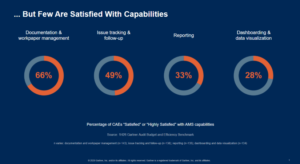

Bourke explained that differences in satisfaction do not depend on product capabilities alone. Audit departments can purchase the same platform but realize very different levels of value depending on whether they standardize their methodology, integrate workflows and reduce reliance on spreadsheets, email and disconnected processes.
“Buying decisions are often driven by what a platform can theoretically support, while implementation success depends on how teams actually operate,” said Bourke. “That’s one reason capability comparisons alone rarely tell the full story.”
Start with Workflows, Not Features
Audit buyers face a complex market spanning specialist AMS products, broader governance, risk and compliance platforms, and enterprise software ecosystems. Bourke recommended first identifying the audit workflows that need improvement and then aligning audit, other assurance functions and IT before evaluating vendors. This ensures audit requirements are not lost among competing platform, integration and support priorities.“The best AMS projects recognize the potential for competing perspectives early,” said Bourke. “Rather than waiting until vendor selection, successful organizations align stakeholders first and evaluate vendors second.” 