Year: 2026

When ‘Working Scared’ Breaks Your Risk Assessment

GUEST BLOG POST: Internal audit talks a lot about risk assessment quality, coverage, methodology, data sources, and scoring, but far less about the human conditions that shape what risks even show up on the table. One of those conditions is psychological safety: whether people feel safe enough to say, “Something Read More

Collaborating with finance on AI

How AI Is Reshaping Collaboration Between Finance and Internal Audit

An effective internal financial audit relies on clear communication and collaboration between auditors and finance teams. However, traditional processes, rooted in manual data collection and sampling, risk inconsistencies and retroactive review processes. With governed, reconciled data, finance and audit teams can identify risk signals earlier and support stronger control processes. Read More

Audit management software

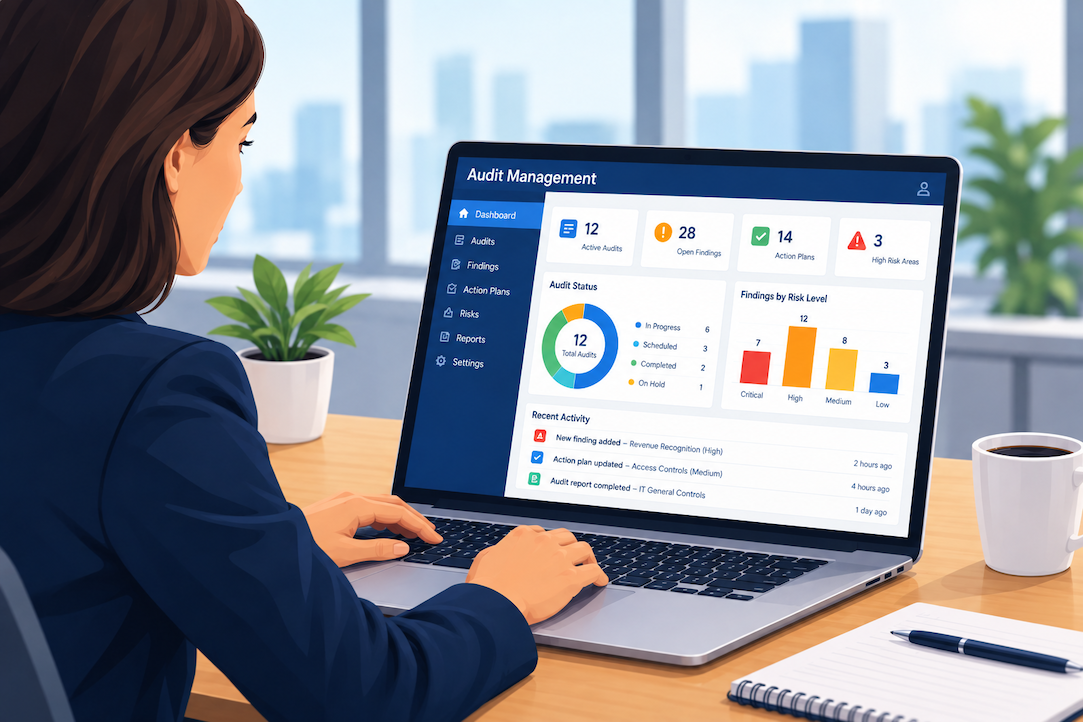
Survey: 84 Percent of Audit Functions Have Adopted Audit Management Software

While 84 percent of audit functions have adopted audit management software (AMS), satisfaction varies considerably across key capabilities, according to Gartner, a business and technology insights company. Speaking at the Gartner Enterprise Risk, Audit & Compliance Conference taking place in Grapevine today, James Bourke, Director Analyst, Research, in the Gartner Read More

Workiva Advances Regulatory Work with AI Innovation

Workiva, an audit-ready platform for trust, transparency, and accountability, unveiled dozens of new product and platform innovations at Amplify 2026, the company’s annual conference attended by thousands of finance, accounting, sustainability, risk, and compliance leaders. As part of those innovations, Workiva introduced Agent Studio, a platform capability that allows users Read More

Kyrgyzstan

The IIA Expands to Kyrgyzstan

The Institute of Internal Auditors has announced that Kyrgyz Republic (Kyrgyzstan) has joined its global federation as a national institute, strengthening the profession’s international reach and reinforcing ongoing efforts to advance internal audit worldwide. As an approved national institute, IIA-Kyrgyz Republic gains the legal framework and formal structure to support Read More

Professional Skepticism

Why Professional Skepticism Is Too Important to Leave to Internal Audit Alone

Internal auditors are trained to ask questions. So why do governance failures still occur in organizations with mature internal audit functions, established control frameworks, experienced auditors, risk registers, audit committees, and well-documented assurance processes? The conventional answer is that risks were missed. My research suggests something more uncomfortable. In many Read More

ESG risks are lurking under the surface

Less Hype, More Hazard: The Next Generation of ESG Audits

Environmental, social, and governance issues might have dropped down internal audit’s list of priorities as regulators in the United States have backed away from some of the more ambitious ESG initiatives of recent years. But if the regulatory pressures have eased, and the ESG headlines have faded, the underlying risks Read More

Salo FASB Chair

FAF Selects Next Chair of the Financial Accounting Standards Board

The Financial Accounting Foundation (FAF) today announced the appointment of Hillary H. Salo as the next chair of the Financial Accounting Standards Board (FASB). Her term as chair will begin July 1, 2027, and conclude June 30, 2034. Salo currently serves as vice chair of FASB and chair of the Read More

Internal Audit tech spending to rise

Survey, Internal Audit Use of AI Growing, But Strategic Adoption Lacking

While most of audit leaders report some level of AI use (93 percent), only 38 percent have an AI strategy, according to a survey by Gartner, a business and technology insights company. The poll of 743 audit professionals, taken recently, revealed that generative AI (GenAI) use cases in internal audit Read More

Auditing fairness and bias in AI models

Auditing Fairness and Bias in AI Models

Fairness in artificial intelligence has moved from a technical topic to a governance responsibility. Regulators and investors now expect boards to identify who owns algorithmic risk, to understand how high‑impact models make decisions, and to show that monitoring is continuous. Internal audit is not expected to rebuild models. Its job Read More